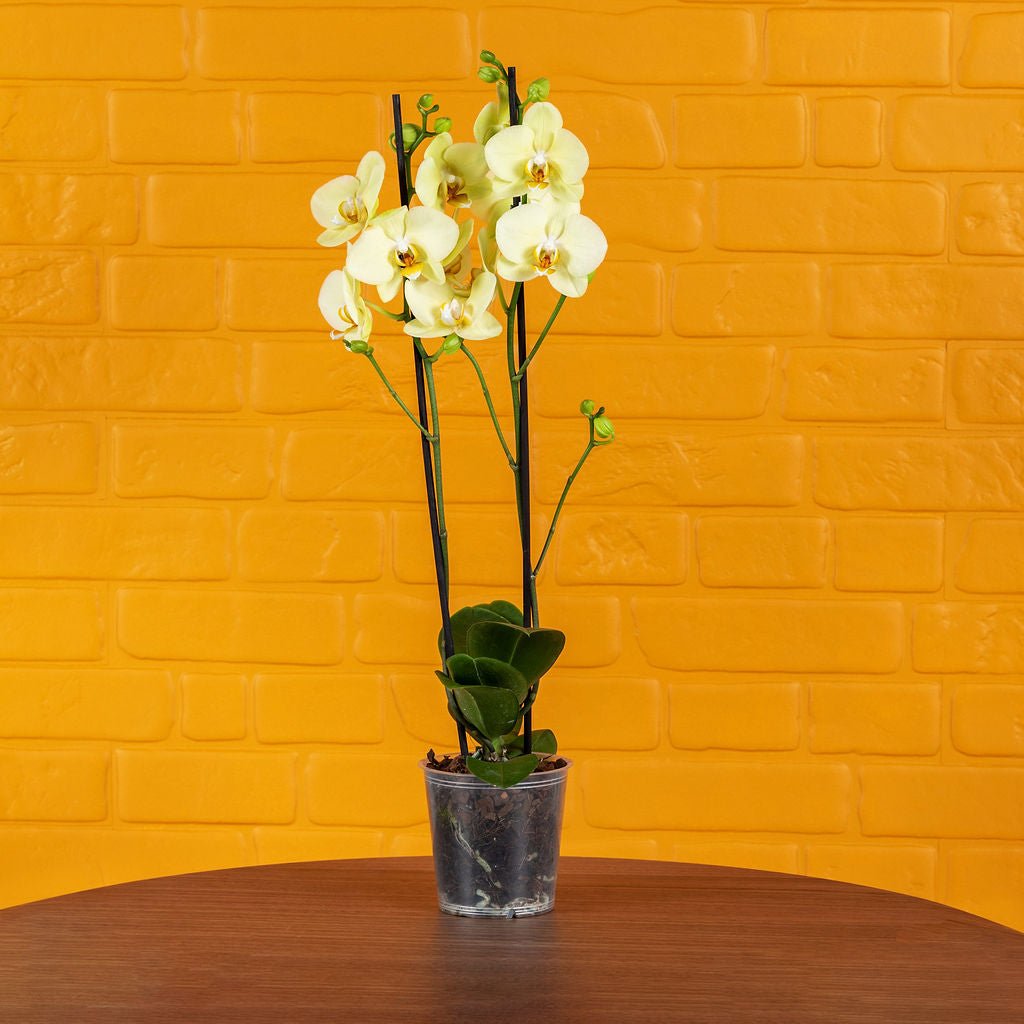



One of the questions we're asked most often is, "How long do orchids last?" The answer depends on whether you're talking about the flowers or the plant itself.
The flowers of a healthy Phalaenopsis orchid can last for two to three months, while the plant itself can continue growing and flowering for 15 years or more with the right care. That's one of the reasons orchids are such rewarding houseplants – they aren't just beautiful for a season, but can bloom again year after year. Unlike cut flowers, which are enjoyed for just a few days, orchids remain living plants throughout their flowering period. With the right care, they continue to grow long after the blooms have faded.
At Love Orchids, we've been growing Phalaenopsis orchids at our family nursery in the New Forest for over 20 years. In this guide, we'll explain what affects how long orchids last, how to enjoy their flowers for longer and what to do once the blooms have finished.
In this guide:
🌿 Grower's Tip
Every orchid begins its journey long before it flowers. By the time a Love Orchids orchid reaches your home, it has already spent around 12 months developing strong roots, healthy leaves and beautiful flower spikes. That strong foundation is what helps your orchid continue growing and blooming long after its first display has finished.
1. How Long Do Orchid Flowers Last?
One of the reasons orchids are so popular is their incredibly long-lasting flowers. While many flowering houseplants bloom for just a few weeks, a healthy Phalaenopsis orchid can stay in flower for eight to twelve weeks, and often even longer in the right conditions.
Unlike cut flowers, which have been separated from the plant, orchid flowers remain attached to a healthy, living plant that's continually supplying them with water and nutrients. This is one of the reasons they can stay beautiful for weeks or even months.
Unlike many plants, orchids don't open all of their flowers at once. The buds gradually bloom over several weeks, helping to extend the flowering display and giving you longer to enjoy your orchid.
The exact flowering time depends on the variety, the environment in your home and how well the orchid is cared for. Bright, indirect light, careful watering and a stable temperature will all help your flowers last as long as possible.
🌿 Grower's Tip
When we're selecting orchids for dispatch, we don't simply choose the plants with the most open flowers. We look for a balance of open blooms and developing buds so that your orchid continues opening new flowers long after it arrives at its new home.
2. How to Help Your Orchid Last Longer
A healthy Phalaenopsis orchid can reward you with beautiful flowers for months, but a few simple care habits will help you enjoy them for even longer.
The most important factors are light, watering and temperature. Place your orchid in bright, indirect light, water only when the bark has dried and the roots have turned silvery-grey, and keep it away from radiators, cold draughts and direct sunshine. A stable environment will help your orchid stay healthy and keep its flowers looking their best.
Because orchids naturally grow attached to trees rather than in soil, they're planted in specialist orchid bark. This free-draining growing medium allows air to circulate around the roots and prevents them from becoming waterlogged. Never plant your orchid in ordinary compost, as it holds too much moisture and can damage the roots.
One of the biggest mistakes new orchid owners make is trying to do too much. Phalaenopsis orchids are surprisingly resilient, and in many cases, less is more.
🌿 Grower's Tip
Healthy roots are the foundation of a long-lasting orchid. Green roots are still holding moisture, while silvery-grey roots indicate it's time to water. Learning to read your orchid's roots is one of the simplest ways to prevent overwatering and keep your plant healthy.
Want to understand what your orchid's roots are telling you? Read our guide to understanding orchid roots.
3. What Happens When the Flowers Fall?
Watching the last flowers fall can be disappointing, but it's a completely natural part of your orchid's lifecycle. It doesn't mean your orchid has died – in fact, a healthy Phalaenopsis orchid is simply moving into its next stage of growth.
After flowering, your orchid enters a resting phase. During this time, it focuses its energy on producing healthy roots and leaves before developing a new flower spike. With the right care, most orchids will flower again, rewarding you with another beautiful display.
Continue caring for your orchid just as you did when it was in flower. Keep it in a bright position, water when the roots turn silvery-grey and avoid overwatering. Although the plant may not be as colourful for a while, it's still growing and storing energy for its next flowering season. Although your orchid may not be flowering, the leaves and roots are still actively growing. Keeping these healthy is what allows the plant to produce its next flower spike.
If you'd like to understand what happens next, from new root growth through to reblooming, read our guide to From Seed to Beauty: The Lifecycle of an Orchid, where we explore each stage of an orchid's remarkable journey.
🌿 Grower's Tip
A Phalaenopsis orchid doesn't continuously produce flowers. It alternates between periods of flowering and active growth. Once blooming has finished, the plant redirects its energy into producing new roots and leaves before developing its next flower spike.
4. Can Orchids Flower Again?
One of the reasons Phalaenopsis orchids are such popular houseplants is that they can flower time and time again. While each display of blooms will eventually come to an end, the plant itself continues to grow, producing new leaves and roots before developing another flower spike.
The key to encouraging your orchid to rebloom is patience and consistency. Continue to provide bright, indirect light, water only when the roots have turned silvery-grey and avoid sudden changes in temperature. A healthy orchid needs time to build up its energy before it's ready to flower again.
It's worth remembering that reblooming doesn't happen overnight. Depending on the time of year and growing conditions, it may take several months before you see signs of new growth. The first signs of new growth are often fresh leaves or bright green root tips. As your orchid rebuilds its energy reserves, it will eventually produce a new flower spike, ready for its next display.
If you'd like to learn more about each stage of your orchid's growth, read our guide to The Lifecycle of an Orchid, which explains how orchids naturally move from flowering to resting and back into bloom again.
🌿 Grower's Tip
Every orchid we grow spends around 12 months developing a strong root system, healthy leaves and flower spikes before it's ready to leave our nursery. After flowering, your orchid returns to this growing phase. By continuing to care for the roots and leaves, you're helping the plant build the energy it needs for its next spectacular display.
5. What Affects How Long an Orchid Lasts?
A Phalaenopsis orchid's lifespan isn't determined by luck – it's largely influenced by the conditions it's grown in. While every orchid is different, a healthy plant kept in the right environment can continue to grow and flower for many years.
Light is one of the biggest factors. Orchids thrive in bright, indirect light, where they can produce the energy needed for healthy growth and future flowers. Too much direct sunshine can scorch the leaves and flowers, while too little light may result in fewer blooms.
Humidity also plays a part. Because orchids originate from tropical forests, they appreciate a little moisture in the air. Most UK homes provide enough humidity, but avoid placing your orchid next to radiators or other direct heat sources, as dry air can shorten the life of the flowers and stress the plant. Good airflow is equally important, helping moisture evaporate from the bark while keeping the roots healthy.
Watering also plays an important role. Overwatering is one of the most common causes of orchid problems, so always allow the bark to dry slightly between waterings. Checking the roots rather than watering to a schedule is the simplest way to keep your orchid healthy.
Although not essential, feeding your orchid with a specialist orchid fertiliser during the growing season can help support healthy roots, leaves and future flowers. Always follow the instructions carefully, as overfeeding can do more harm than good.
Finally, try to provide a stable environment. Sudden changes in temperature, cold draughts or placing your orchid next to a radiator can shorten the life of the flowers and may even cause unopened buds to drop before they've had chance to open, a condition commonly known as bud blast.
Fresh orchid bark provides the ideal balance of moisture retention and airflow. As bark naturally breaks down over time, it holds more water and less air around the roots, making regular repotting an important part of long-term orchid care.
By recreating the conditions orchids enjoy in nature – bright filtered light, good airflow and careful watering – you'll give your orchid the best chance of producing beautiful blooms year after year.
🌿 Grower's Tip
In our nursery, consistency is the key to growing healthy orchids. Stable temperatures, bright filtered light and careful watering place far less stress on the plant than constantly changing its environment. At home, following the same principle will help your orchid thrive.
6. How Long Can an Orchid Plant Live?
While the flowers of a Phalaenopsis orchid last for a few months, the plant itself can live for many years. In fact, with the right care, it's not unusual for an orchid to thrive for 15 years or more, producing beautiful displays of flowers time and time again.
The secret isn't complicated care or expensive products. Healthy roots, good light and consistent watering are the foundations of a long-lived orchid. As the plant matures, it will continue to produce new leaves, fresh roots and flower spikes, following the same natural growing cycle year after year.
Because orchids are slow-growing plants, they reward patience. As an orchid matures, it's not uncommon for a healthy plant to produce increasingly impressive displays of flowers.
🌿 Grower's Tip
We often hear from customers who are amazed that their orchid has flowered again after several years. With the right care, that's exactly what a healthy Phalaenopsis orchid is designed to do. Every flowering season is the result of months of steady growth beneath the surface.
Final Thoughts
A Phalaenopsis orchid is one of the longest-lasting flowering houseplants you can own. While each display of flowers will eventually come to an end, the plant itself can continue growing and blooming for many years with the right care.
By understanding how orchids grow and following a few simple care principles, you'll give your orchid the best chance of thriving. Remember, the flowers may eventually fade, but a healthy orchid is a long-lived plant that can continue growing and blooming for many years to come.
If you'd like to learn more about caring for your orchid, explore our collection of orchid care guides, where our growers share practical advice to help you enjoy beautiful blooms for longer. The flowers may last for months, but with the right care, the orchid itself can bring beauty to your home for many years to come.