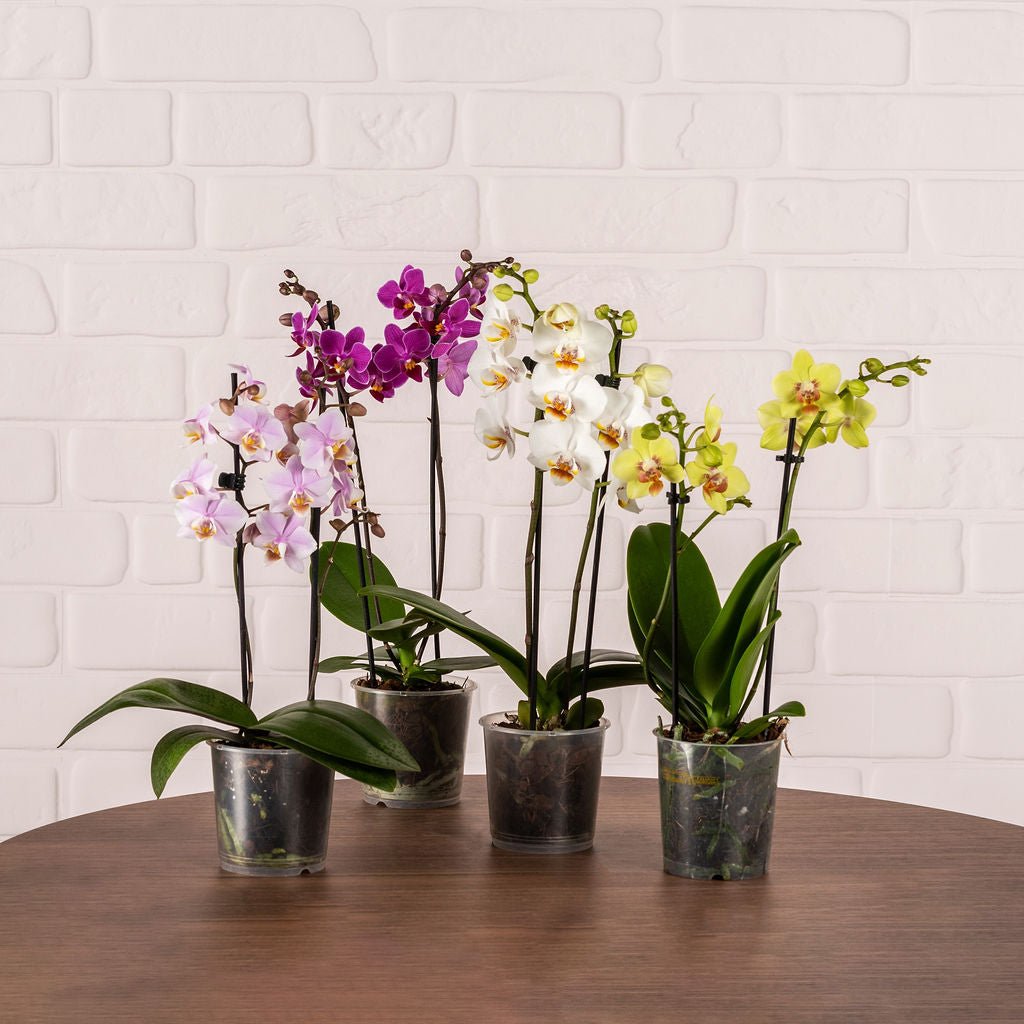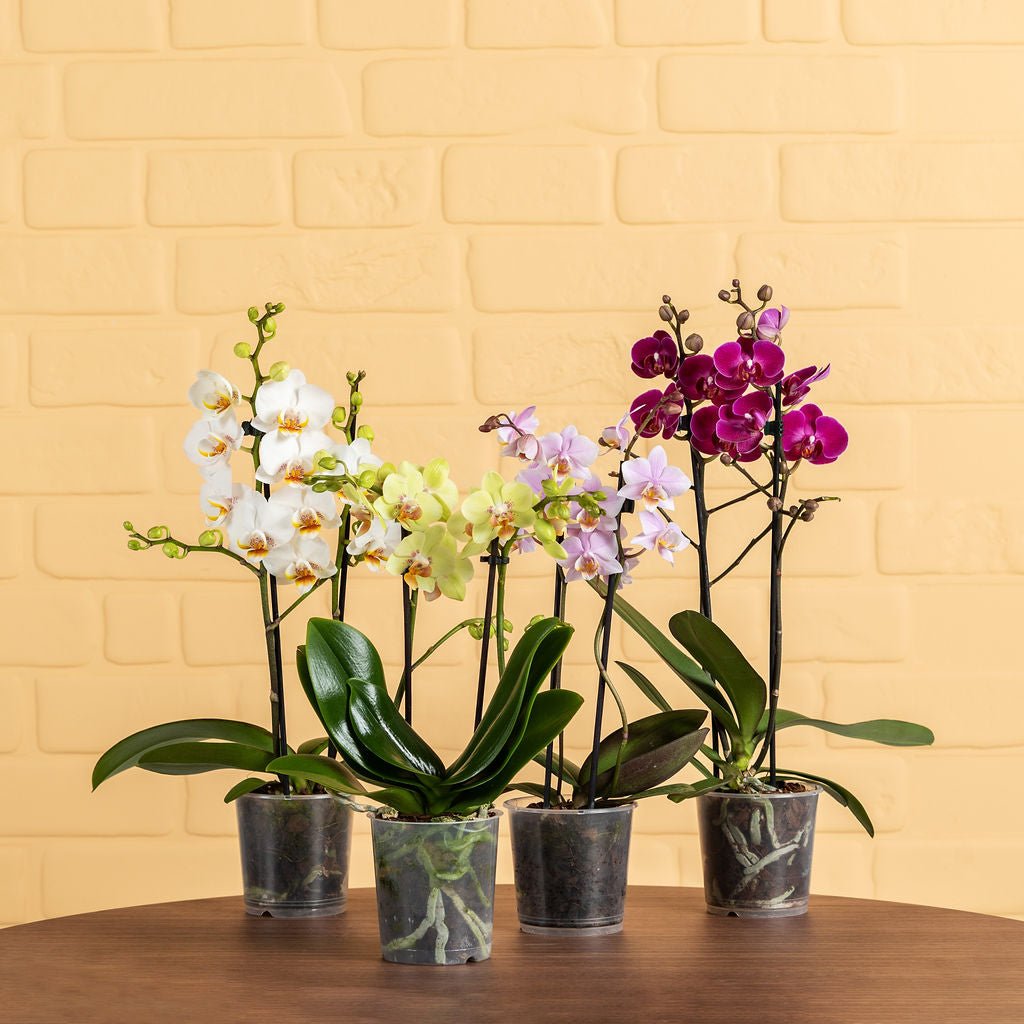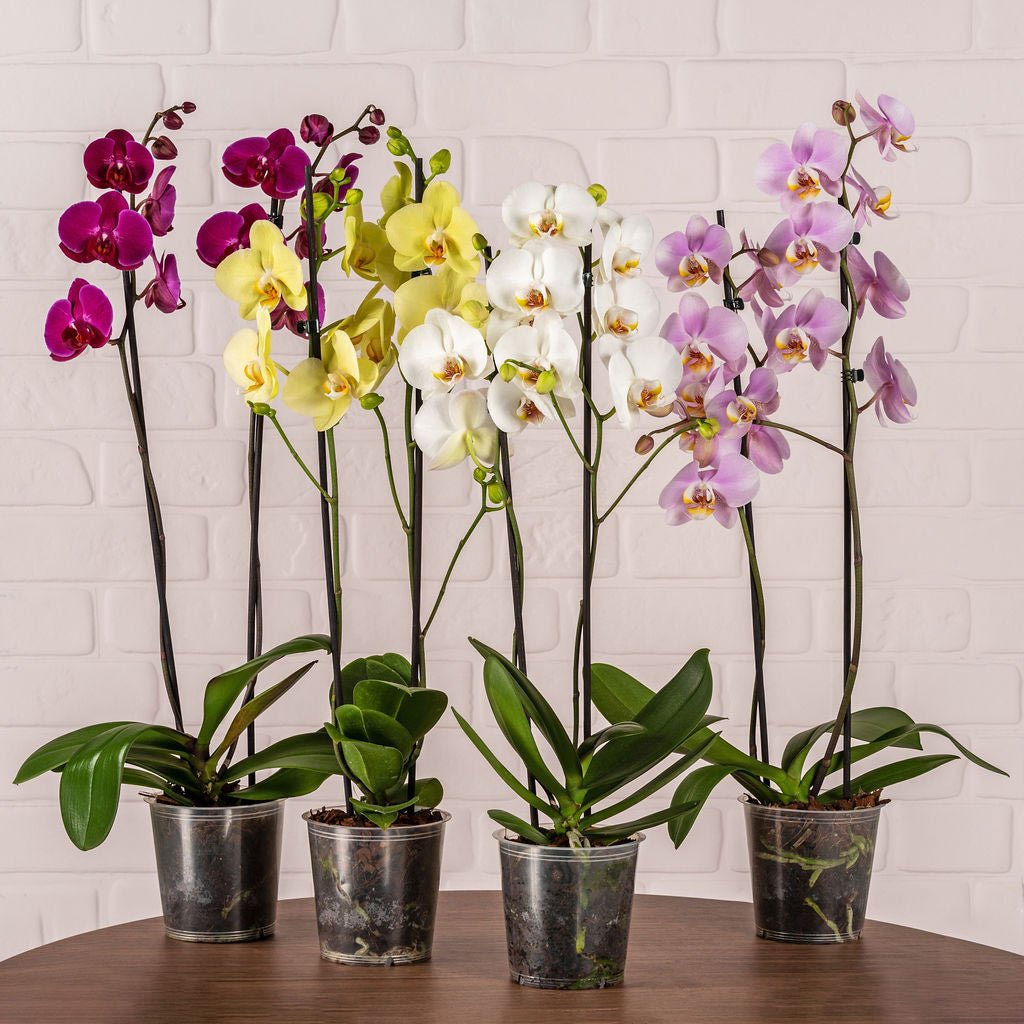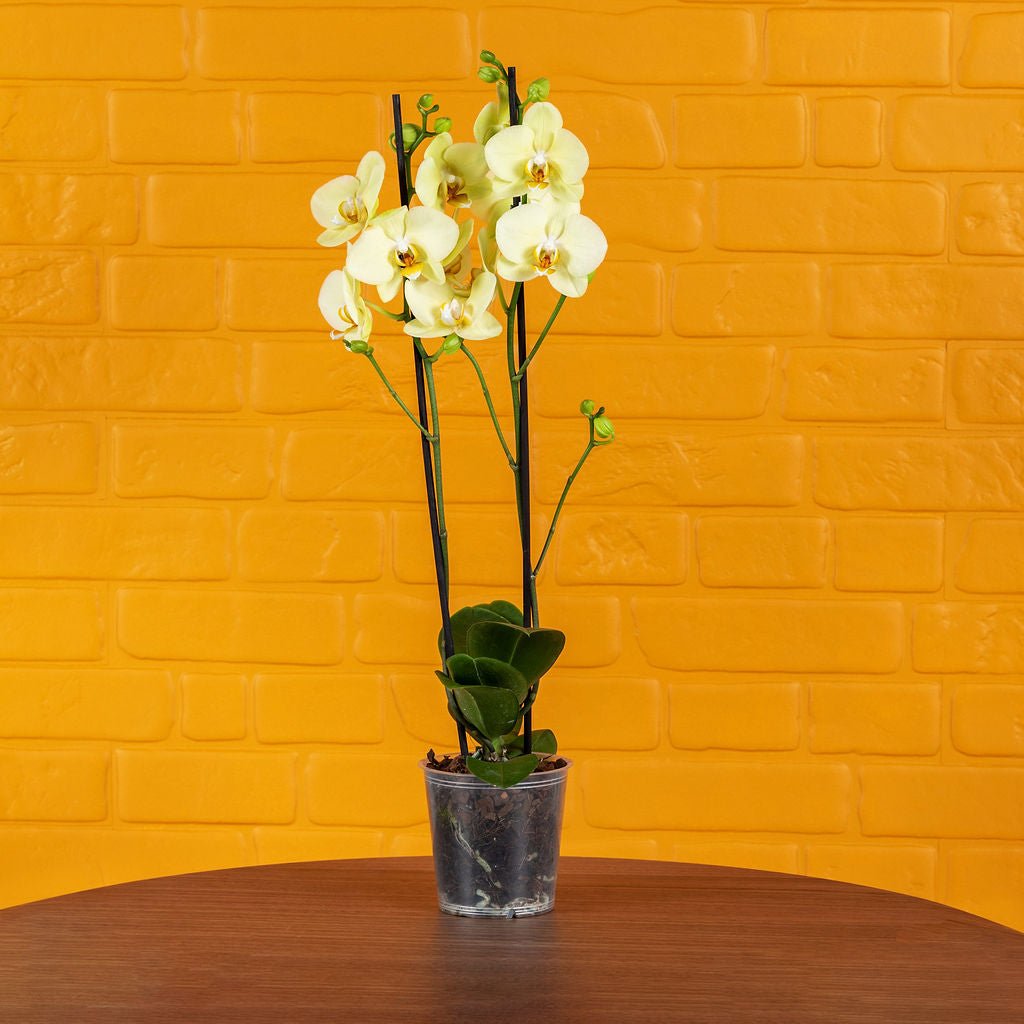



Phalaenopsis orchids originate from warm, tropical environments, so they're quite happy in the warmth of our homes. In fact, at our New Forest nursery, we grow young Phalaenopsis at around 28–30°C.
But when temperatures climb during the summer, a few small changes to your usual orchid care routine can help keep your plant healthy and its flowers looking beautiful for longer.
The biggest things to watch during hot weather are water, direct sunlight and temperature. Your orchid may dry out more quickly than usual, while strong summer sunshine through a window can scorch its leaves surprisingly quickly.
The good news is that there's no need to completely change how you care for your orchid during a heatwave. Our growers recommend watching the plant rather than the calendar and adjusting its care as conditions change.
In this guide:
- How often to water an orchid in hot weather
- Protecting your orchid from strong summer sun
- What temperature is too hot for an orchid?
- Should you mist an orchid in hot weather?
- Can you water an orchid with ice cubes in summer?
- Should you feed an orchid during summer?
- Keep orchids away from ripening fruit
- Signs your orchid may be struggling
- Can orchids survive a heatwave?
1. How Often Should You Water an Orchid in Hot Weather?
Your orchid may need watering more frequently during hot weather – but that doesn't necessarily mean watering it twice a week.
Warmer temperatures can cause water to evaporate more quickly from the bark, so an orchid that normally stays hydrated for a week may dry sooner during a spell of hot weather.
Instead of automatically adding another watering, check the roots.
Phalaenopsis roots are covered in a sponge-like layer called velamen, which helps them absorb water. It also gives us a useful clue about when an orchid needs watering.
Look through the clear nursery pot. When the roots inside are green and plump, there's usually still moisture available to the plant. As they dry, they'll become more silvery-grey.
You may also be able to see moisture or condensation inside the clear pot. If you can, your orchid probably doesn't need watering yet.
Once the bark feels dry and the roots have changed from green to silvery-grey, it's probably time to water.
You can water your orchid under a gently running tap or dunk the nursery pot in a bowl of water for a few minutes. Whichever method you choose, allow it to drain thoroughly before returning it to its decorative pot.
Never leave an orchid standing in water.
During particularly warm weather, the key is simply to check your orchid more frequently. A plant in a warm, bright room may dry considerably faster than one kept somewhere cooler.
🌿 Grower's Tip
Don't add an extra watering simply because it's hot outside. Check your orchid first.
Pot size, bark, room temperature and position can all affect how quickly an orchid dries, so the roots are a much better guide than a fixed watering schedule.
And don't worry if some roots are growing outside the pot. Phalaenopsis are epiphytes, which means that in the wild they naturally grow attached to trees rather than in soil. Healthy aerial roots are completely normal and don't need to be cut off.
Want to understand what your orchid's roots are telling you? Read our guide to orchid roots.
2. Keep Your Orchid Out of Strong Summer Sun
Phalaenopsis orchids enjoy plenty of bright, indirect light, but strong direct sunshine can damage their leaves.
This is particularly important during summer, when sunlight coming through glass can become much more intense.
An east- or west-facing room can work well, or position your orchid a little further back from a very sunny window. If strong sunlight falls directly onto the leaves for long periods, move the plant or use a sheer blind or curtain to filter the light.
If your orchid normally lives happily on a windowsill throughout the rest of the year, remember that the same position can become much hotter and brighter during summer.
What Does Orchid Sunburn Look Like?
Sunburn can initially appear as discolouration on the leaves, followed by pale, yellowed or damaged patches where the tissue has been exposed to too much intense light.
Once a leaf has been badly scorched, the damaged tissue won't return to green. Move your orchid away from direct sunshine, but leave healthy parts of the leaf attached so they can continue providing energy to the plant.
🌿 Grower's Tip
In our glasshouses, we carefully control light levels to protect our orchids from intense sunlight. You don't need specialist equipment at home – a sheer blind or simply moving your orchid back from a sunny window can do the same job.
3. What Temperature Is Too Hot for an Orchid?
Phalaenopsis are warm-growing orchids, so a hot summer's day doesn't automatically mean your orchid is too hot.
At our New Forest nursery, young Phalaenopsis are grown at around 28–30°C before they're moved into cooler conditions to encourage flowering.
At home, it's often the combination of heat and intense direct sunlight that's more important than the temperature alone. A sunny windowsill can become considerably hotter than the surrounding room, particularly when strong summer sunshine is coming through glass.
During a heatwave, keep your orchid out of intense direct sunlight and avoid very hot, enclosed positions.
Some airflow can help when conditions become particularly warm, but don't direct a powerful fan straight at the flowers.
Orchids also prefer reasonably stable conditions, so try to avoid sudden extremes or dramatic changes in temperature.
And while bathrooms can provide naturally higher humidity, light is still important. A dark bathroom isn't automatically a good home for an orchid simply because it's humid.
🌿 Grower's Tip
At our nursery, temperature, light and humidity are monitored together to create the best conditions for our orchids.
You don't need greenhouse technology at home. Simply protect your orchid from intense direct sunshine, keep an eye on how quickly it's drying out and avoid sudden extremes.
Want to see how we manage these conditions at our nursery? Read How Is an Orchid Grown?
4. Should You Mist an Orchid in Hot Weather?
You don't need to mist your Phalaenopsis orchid routinely, even in summer.
Misting doesn't replace proper watering, and repeatedly wetting the flowers can cause spotting. Tap water can also leave visible mineral deposits on the leaves, particularly in hard-water areas.
If the air in your home becomes particularly dry, you can increase the humidity immediately around your orchid by placing it on a shallow tray of damp gravel or pebbles.
Make sure the bottom of the orchid pot sits above the water rather than in it.
Most importantly, concentrate on keeping the roots properly hydrated rather than trying to compensate for a dry orchid by continually spraying its leaves.
5. Can You Water an Orchid With Ice Cubes in Summer?
Yes. If you normally use our ice cube watering method, you can continue to do so during warmer weather.
It might seem surprising to put ice onto a tropical plant, but it's a useful way of providing a small, controlled amount of water.
Ice cubes can be particularly helpful for orchids planted in arrangements that are difficult to dunk and drain, or if you're prone to giving your orchid too much water, because they make it easier to control the amount you're adding.
Place the recommended amount of ice onto the bark, away from the leaves and centre of the plant, and allow it to melt gradually.
Never place ice directly into the crown or heart of the orchid, as allowing water to collect here can encourage rot.
The important thing during a spell of hot weather isn't automatically to add more ice – it's to check whether your orchid is actually drying more quickly.
Whichever watering method you prefer, always make sure excess water can drain away and never leave your orchid sitting in water.
6. Should You Feed an Orchid During Summer?
In the wild, Phalaenopsis grow as epiphytes on trees, where they naturally receive very few nutrients. This means their feeding requirements are surprisingly small.
Feeding isn't essential for keeping your orchid alive and healthy.
If you choose to feed your orchid, use a specialist orchid fertiliser at a weak concentration and never exceed the manufacturer's instructions.
More fertiliser doesn't mean more flowers. In fact, too much feed can damage the orchid's sensitive roots.
Signs of overfeeding can include white salt deposits building up on the bark or damage and discolouration to the roots.
If you're new to orchid care, don't worry too much about feeding. The most important things are getting the watering, light and position right.
🌿 Grower's Tip
It's much easier to damage a Phalaenopsis by overfeeding than by not feeding it enough.
If feeding feels confusing, keep things simple. Your orchid can manage perfectly well with very little additional nutrition.
For more advice on feeding, watering and positioning your orchid, read our Expert Orchid Care Tips.
7. Keep Orchids Away From Ripening Fruit
This advice applies all year round, but it's worth remembering during summer.
Ripening fruit – particularly bananas and other fruits that continue to ripen after picking – releases ethylene gas.
Phalaenopsis flowers and buds are sensitive to ethylene, which can cause them to age or drop prematurely.
Keep your flowering orchid away from the fruit bowl, especially if you have lots of fruit ripening during warmer weather.
Signs Your Orchid May Be Struggling in Hot Weather
A hot day doesn't automatically mean your orchid is heat-stressed. Instead, look at the whole plant.
Wilting or Limp Leaves
Limp leaves can indicate that your orchid isn't taking up enough water, but don't immediately reach for the watering can.
Check the roots and bark first. Damaged or waterlogged roots can also leave an orchid unable to absorb enough moisture, even when there's plenty of water in the pot.
Silvery-Grey or Wrinkled Roots
Silvery-grey roots can indicate that the orchid has dried and needs watering.
Healthy roots should feel firm. If they're brown, black, soft or mushy, this can instead be a sign of root damage or overwatering.
For more help identifying healthy and unhealthy roots, see our Orchid Roots Explained guide.
Scorched or Bleached Leaves
Pale, yellowed, brown or bleached patches on the leaves are more suggestive of excessive direct sunlight than simply high air temperature.
Move the orchid away from strong direct sunshine and into bright, indirect light.
Dropping Buds or Flowers
Dropping buds or flowers can occur when an orchid experiences environmental stress, including sudden changes in temperature or growing conditions.
If your orchid is struggling during hot weather, resist the temptation to change everything at once.
Move it away from strong direct sunshine, check the roots and moisture level and give the plant time to adjust.
🌿 Grower's Tip
If your orchid looks unhappy during hot weather, check the roots before reaching for the watering can.
Limp leaves don't always mean your plant needs more water. Damaged roots can also prevent an orchid from taking up moisture.
Healthy roots should feel firm, not soft or mushy.
Can Orchids Survive a Heatwave?
Yes. Phalaenopsis are tropical, warm-growing plants and can cope surprisingly well with warm summer weather.
The key is to protect your orchid from intense direct sunlight, check more frequently to see whether it's drying out and avoid sudden changes in its growing conditions.
You don't need to completely change your orchid care routine just because temperatures rise. Let the plant – particularly its roots – tell you what it needs.
How to Keep Your Orchid Healthy This Summer
Phalaenopsis orchids don't need complicated summer care. In most cases, it's simply a matter of checking them a little more frequently.
Keep your orchid in bright, indirect light, watch its roots to see when it needs water and protect it from intense summer sunshine and sudden extremes of temperature.
Your orchid may dry more quickly when it's warm, but let the plant tell you what it needs rather than automatically doubling its watering.
With those few adjustments, there's no reason your orchid can't continue looking beautiful throughout the summer – even when the British weather unexpectedly turns tropical.
Looking for more advice? Explore our Expert Orchid Care Tips from the Grower for more in-depth guidance on watering, feeding, roots and the best growing conditions for your Phalaenopsis.