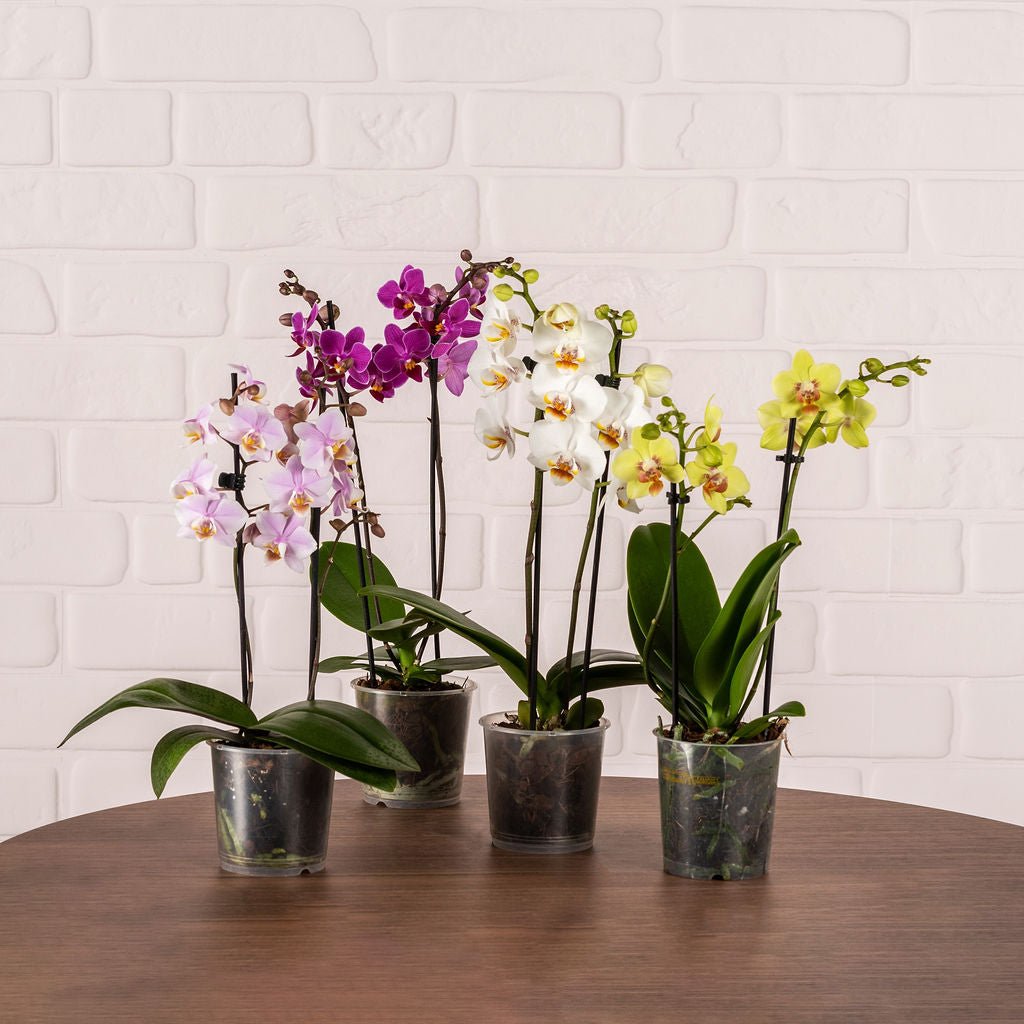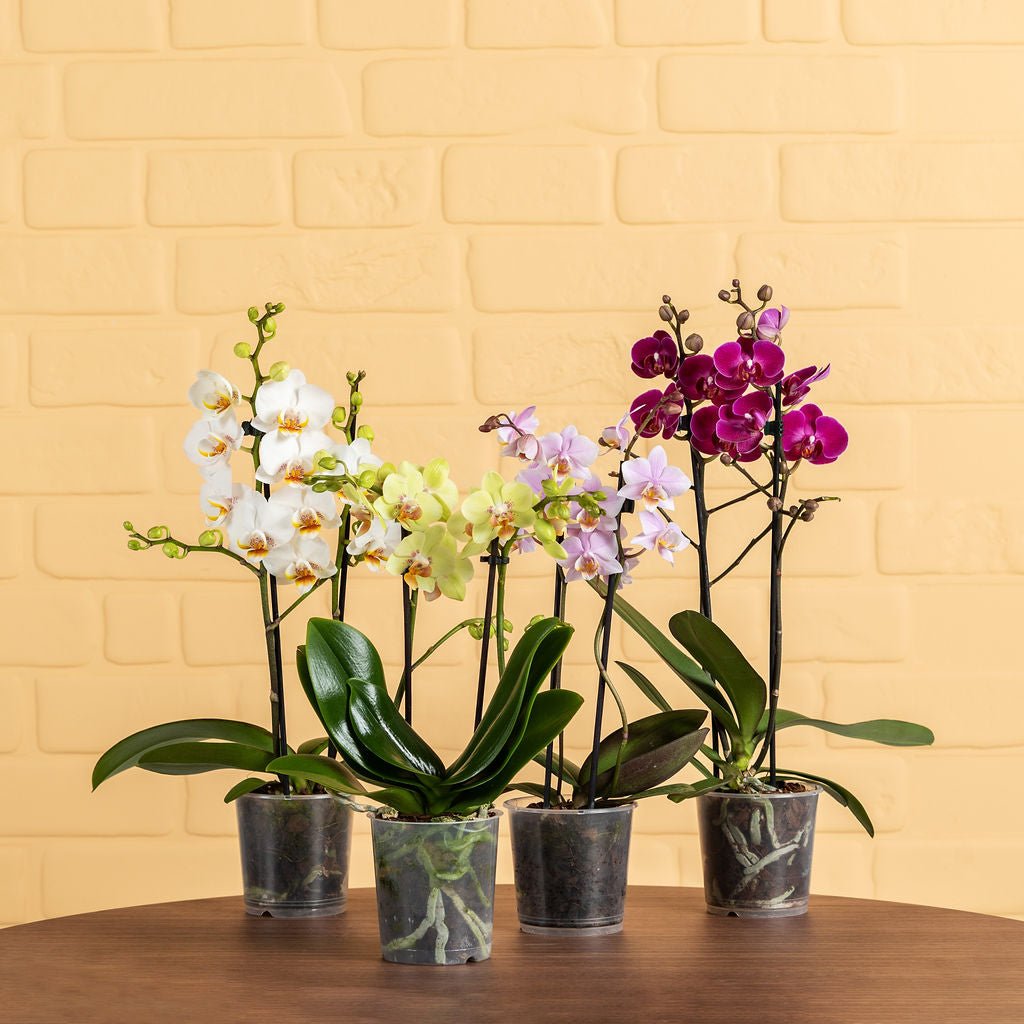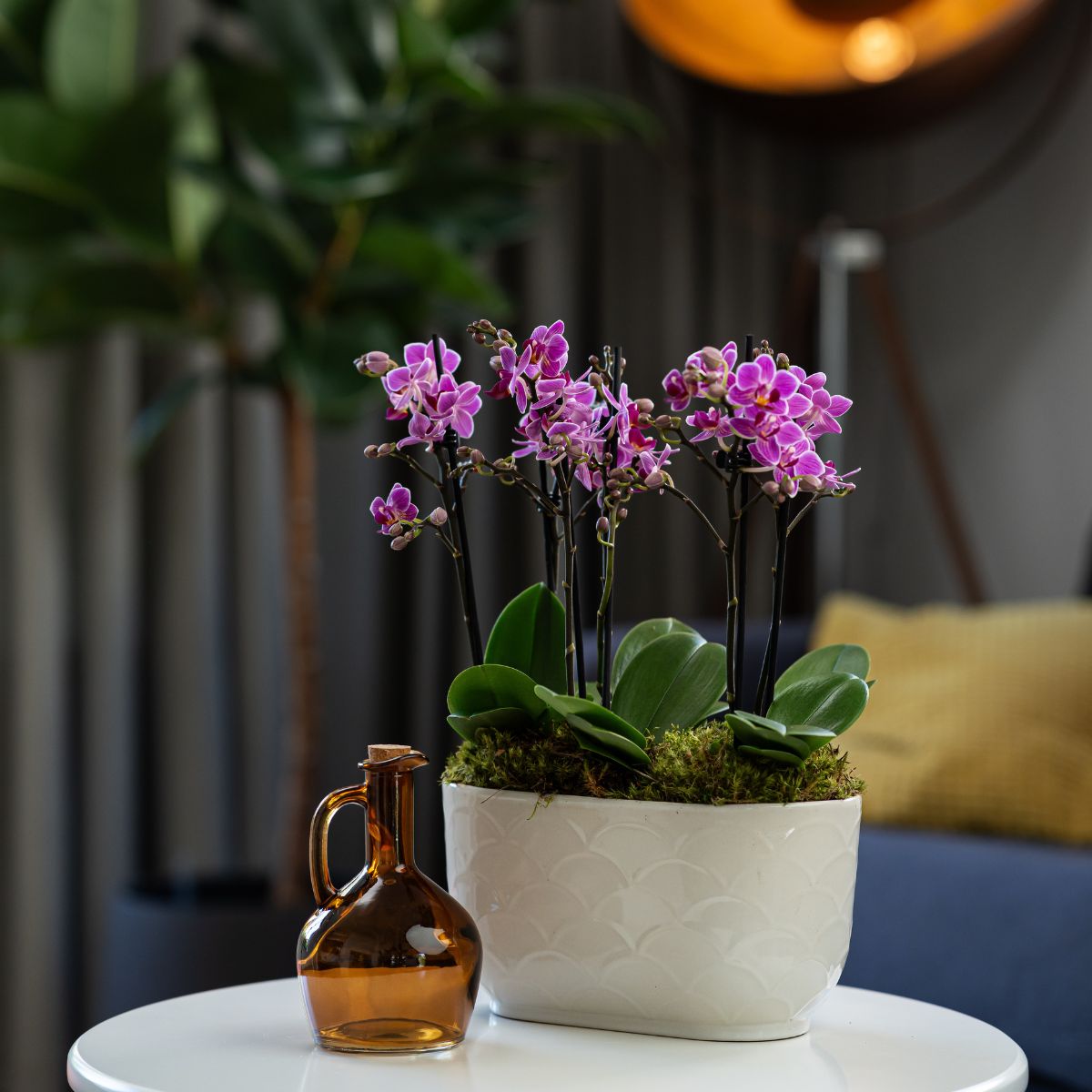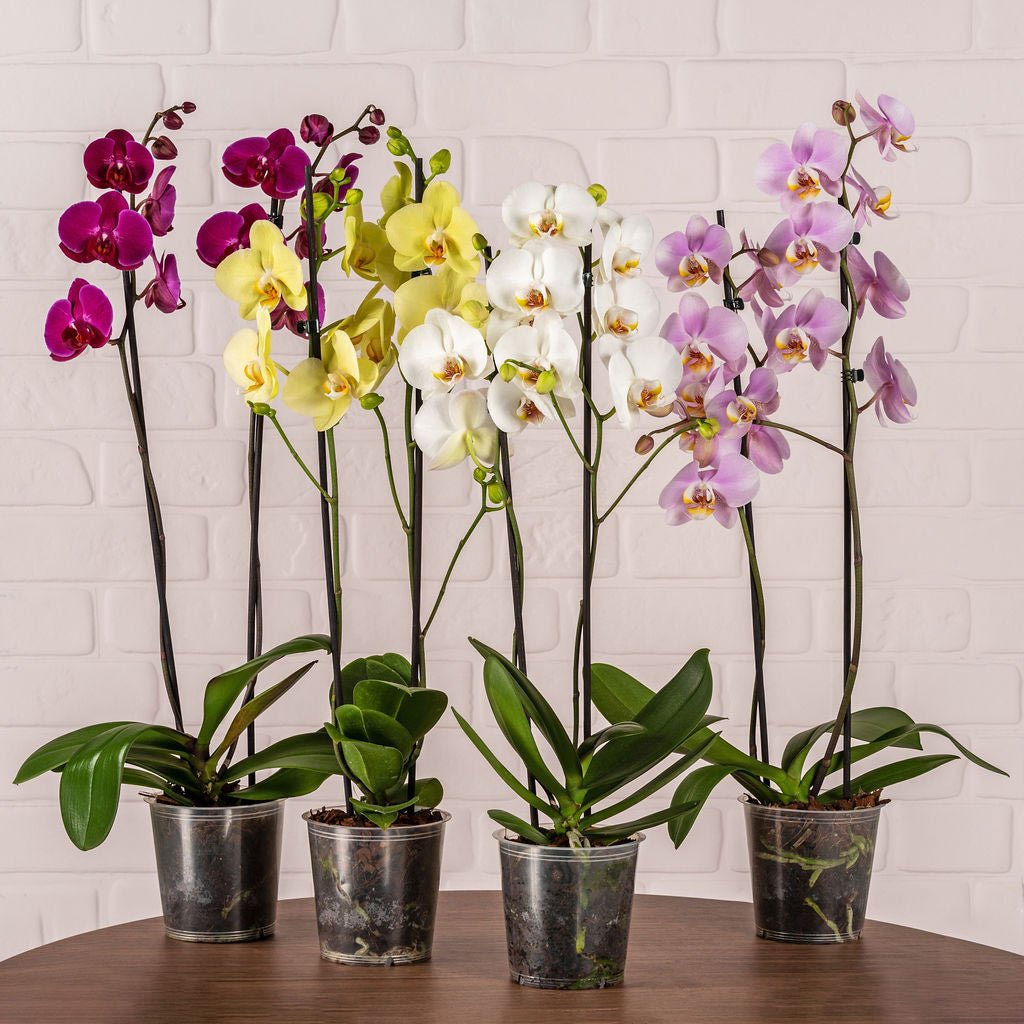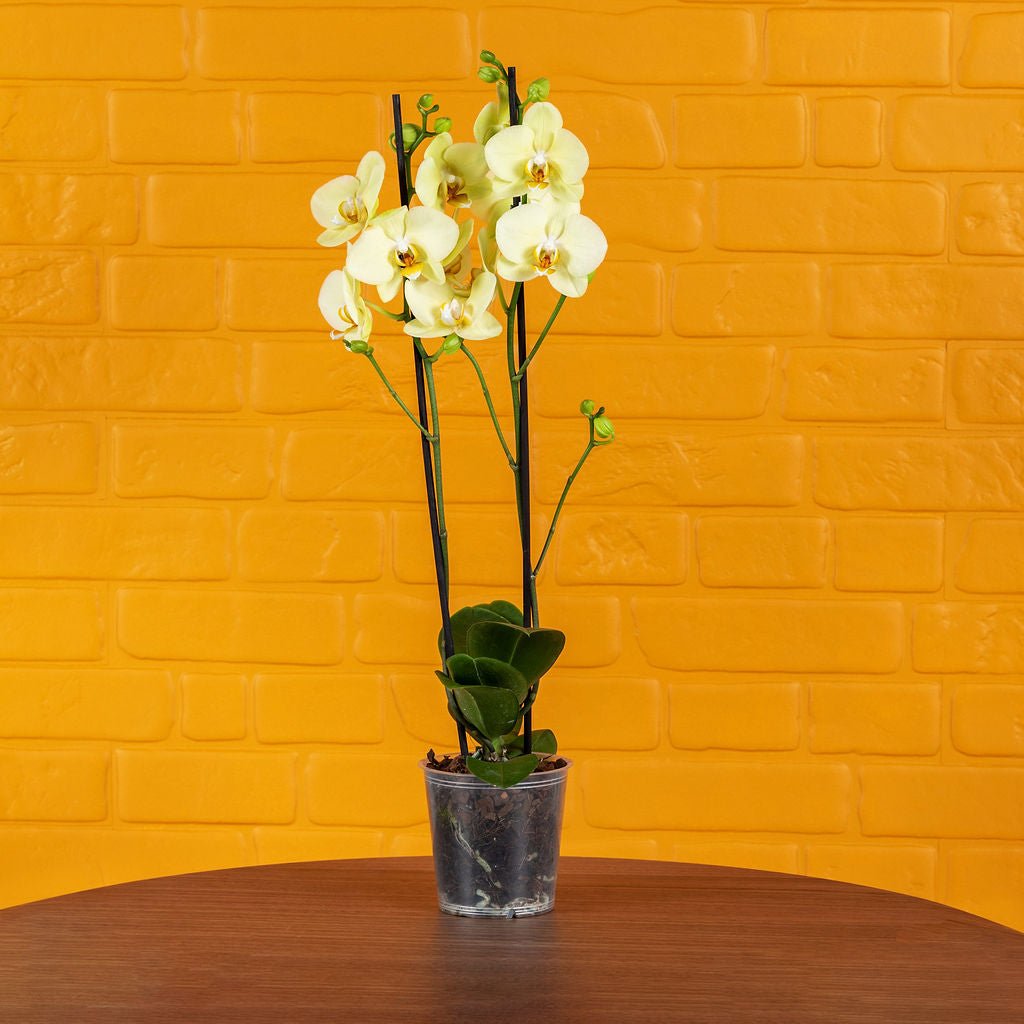



Orchids have a reputation for being difficult to care for, but the truth is they're much easier than many people think. The orchid you'll most commonly find in homes – the Phalaenopsis, or Moth Orchid – is one of the easiest and longest-flowering houseplants you can grow.
The secret to successful orchid care is understanding how they grow in nature. Unlike most houseplants, Phalaenopsis orchids are epiphytes, meaning they naturally grow attached to trees rather than in the ground. Their roots absorb moisture and nutrients from the humid air around them, rather than from soil. That's why orchids need specialist bark instead of compost, and why they prefer to dry out slightly between waterings.
Whether you've just bought your first orchid, received one as a thoughtful gift or are simply looking to build your confidence, a few simple care habits will help your orchid thrive.
It all starts with choosing a healthy plant. Look for firm, glossy green leaves, healthy green or silvery roots, and plenty of unopened buds, as these will continue to open once your orchid is at home. Avoid plants with soft leaves, black patches or soggy potting bark, as these can be signs of stress.
At Love Orchids, every orchid is carefully grown, selected and quality checked at our family nursery in the New Forest before it leaves our nursery. We know that starting with a healthy orchid makes all the difference, which is why every plant is chosen for its quality, long-lasting blooms and excellent condition.
In this guide, we'll share seven simple orchid care tips to help you enjoy beautiful blooms for longer and keep your orchid healthy for years to come.
🌿 Grower's Tip
We've been growing Phalaenopsis orchids for over 20 years, and one thing we've learnt is that they're far tougher than most people realise. In fact, the biggest cause of problems isn't neglect – it's being a little too kind. A bright spot, careful watering and a little patience are often all your orchid needs to thrive.
1. Find the Perfect Spot for Your Orchid
Where you place your orchid can make all the difference. Phalaenopsis orchids thrive in bright, indirect light, making an east- or north-facing windowsill an ideal choice. If your orchid is on a south- or west-facing windowsill, simply diffuse the sunlight with a sheer blind or move it a little further back from the glass during the brightest part of the day.
Like us, orchids can get sunburn. Too much direct sunshine can scorch the leaves, leaving pale yellow, white or brown patches that won't recover. If the leaves start to look bleached or feel hot to the touch, it's a sign your orchid is getting more sun than it would like.
As tropical plants, orchids also enjoy a warm, stable environment with good natural light. Keep them away from radiators, open fires, air conditioning units and cold draughts from doors or open windows, as sudden changes in temperature can cause buds and flowers to drop.
Although orchids naturally grow in humid tropical forests, most UK homes provide enough humidity for them to thrive. If your home is particularly warm or dry, placing your orchid away from direct heat sources will usually be enough to keep it happy.
Once you've found the right spot, try not to move your orchid around too often. Orchids prefer a stable environment and will reward consistency with healthier growth and longer-lasting flowers.
🌿 Grower's Tip
If your orchid is flowering well, you've found the right spot. Orchids don't like being moved from room to room, so once it's happy, leave it where it is.
2. Water Your Orchid Properly
Once you've found the perfect spot, watering is the next most important part of orchid care. The good news is that Phalaenopsis orchids are surprisingly forgiving, and they're much more likely to suffer from overwatering than underwatering.
Unlike houseplants grown in compost, orchids are planted in specialist bark. This open, free-draining mix allows plenty of air to reach the roots while preventing excess moisture from building up. It's one of the reasons orchids are so different to other houseplants and why they should never be planted in ordinary compost or soil.
Rather than watering to a set schedule, it's best to let your orchid tell you when it needs a drink. Healthy roots are easy to read – when they're green, they're still holding plenty of moisture. As they dry, they'll gradually turn a silvery-grey colour, letting you know it's time to water again.
Water your orchid thoroughly, allowing the bark to become evenly moist before letting all the excess water drain away. Never leave your orchid sitting in water, as this can lead to root rot and damage the roots.
Every home is different, so there's no perfect watering routine. The time of year, the temperature in your home and where your orchid is positioned will all affect how quickly it dries out. Learning to check the roots and bark, rather than the calendar, is the simplest way to keep your orchid healthy.
There are several ways to water an orchid successfully, including the ice cube method and traditional watering. The most important thing is allowing excess water to drain away and avoiding constantly wet roots.
🌿 Grower's Tip
One of the most common questions we're asked is, "How often should I water my orchid?" Our answer is always the same: don't water by the calendar, water by the roots. If the roots are still green, leave your orchid for another day or two and check again. It's one of the easiest ways to avoid overwatering.
3. Feed Your Orchid
Phalaenopsis orchids don't need lots of feeding to stay healthy. In the wild, they receive small amounts of nutrients from rainwater and decaying organic matter around their roots, rather than from rich soil. At home, an occasional feed simply helps replace those nutrients and supports healthy leaves, roots and future flowers.
If you'd like to feed your orchid, use a specialist orchid fertiliser and always follow the instructions on the bottle. A weak feed little and often is much better than using too much, as overfeeding can damage the roots.
If you don't have orchid feed, don't worry. A healthy orchid grown in the right conditions can still thrive with good light, careful watering and a little patience. Feeding is an added boost rather than an essential part of day-to-day care.
🌿 Grower's Tip
People are often surprised to hear that we don't think feeding is the secret to growing a healthy orchid. In our experience, getting the light and watering right will make far more difference than reaching for the fertiliser bottle.
4. Don't Worry When the Flowers Finish
One of the most common questions we're asked is, "Has my orchid died?" when the flowers begin to fade. The good news is that this is completely natural. Like all flowering plants, Phalaenopsis orchids go through a growing cycle, and flowering is just one stage of it.
A healthy orchid can produce beautiful blooms for many weeks or even months, but eventually the flowers will naturally fade and fall. This doesn't mean your orchid is dead – it's simply entering a resting phase before it begins producing new leaves, roots and, eventually, another flower spike.
Continue caring for your orchid just as you have before. Keep it in a bright spot, water it when the roots turn silvery-grey and avoid the temptation to throw it away. Although it may not look as colourful for a while, your orchid is storing energy for its next display.
With the right care and a little patience, most healthy Phalaenopsis orchids will flower again, rewarding you with another stunning display.
🌿 Grower's Tip
One of the biggest misconceptions about orchids is that they're disposable houseplants. They're not. With the right care, the same orchid can bloom again year after year. We've seen many customers enjoy the same orchid for years, simply by understanding that flowering is only one stage of its natural lifecycle.
5. Learn to Read Your Orchid
One of the best things about Phalaenopsis orchids is that they'll often tell you how they're feeling. By learning to recognise a few simple signs, you'll feel much more confident caring for your plant.
Healthy leaves should be firm, smooth and a rich green colour. The roots are just as important. Healthy roots are usually green after watering and turn silvery-grey as they dry, making them a useful guide for knowing when your orchid needs a drink.
Don't worry if you notice roots growing above the bark. These are called aerial roots and they're completely natural. In the wild, orchids use them to absorb moisture from the humid air and to anchor themselves to trees.
As you spend more time with your orchid, you'll begin to notice new leaves, fresh roots and eventually a new flower spike. These are all signs that your orchid is healthy and growing well.
🌿 Grower's Tip
Don't judge an orchid by its flowers alone. We always look at the leaves and roots first, as they're the best indicators of a healthy plant. Strong roots and healthy leaves are the foundation for beautiful blooms.
6. Repot When the Time Is Right
Unlike many houseplants, Phalaenopsis orchids don't need frequent repotting. In fact, they're often happiest left undisturbed until they've finished flowering, outgrown their pot or the bark has started to break down.
When the time does come, it's important to use the right growing medium. Never plant your orchid in ordinary compost or garden soil. Because orchids are epiphytes, their roots need plenty of air as well as moisture. Standard compost holds too much water around the roots, while specialist orchid bark allows air to circulate freely and excess water to drain away.
You'll also notice that many orchids are grown in clear plastic pots. This isn't just so you can see the roots – it also allows light to reach them. Orchid roots contain chlorophyll, meaning they can photosynthesise just like leaves, so a clear pot helps support healthy growth while making it easier to see when your orchid needs watering.
If your orchid still has healthy roots and the bark is in good condition, there's no need to rush. Repotting every two or three years is usually enough to keep your orchid growing happily.
🌿 Grower's Tip
Don't repot an orchid just because you've brought it home. If it's healthy, flowering well and the bark is still fresh, it's usually best to leave it exactly where it is. A happy orchid is one that's allowed to settle.
7. Keep Orchid Care Simple
The secret to growing a healthy orchid isn't lots of complicated care – it's understanding what your plant needs. Give it bright, indirect light, water it when the roots turn silvery-grey, use specialist orchid bark and avoid overwatering, and your orchid will reward you with beautiful blooms year after year.
Don't worry if you don't get everything right straight away. Orchids are surprisingly resilient, and learning to care for them is all part of the enjoyment. As you become familiar with your orchid, you'll start to recognise when it's thirsty, when it's producing new growth and when it's preparing to flower again.
If you ever need a little reassurance, we're here to help. Explore our growing library of orchid care guides or visit our Customer Support Centre for answers to common questions. Our growers are always happy to share their knowledge and help you enjoy your orchid for longer.
🌿 Grower's Tip
The best orchid growers aren't the ones who do the most – they're the ones who observe their plants. Spend a few moments looking at your orchid each week and it'll soon tell you everything you need to know.
Final Thoughts
Phalaenopsis orchids have earned an unfair reputation for being difficult, but they're actually one of the easiest and most rewarding houseplants you can grow. Once you understand how they grow in nature and follow a few simple care principles, you'll discover just how straightforward orchid care can be.