

Watering an orchid with ice cubes is probably one of the most debated pieces of orchid-care advice we give.
But yes – you can water a Phalaenopsis orchid with ice cubes, and it's a method we've recommended for many years.
That doesn't mean it's the only way to water your orchid. If you have great success using the dunking method or watering under the tap, carry on. There's no reason to change something that's working.
We recommend ice cubes for a very practical reason: they provide a small, measured amount of water and make it much harder to overwater your orchid.
Many of us at Love Orchids use the ice cube method on our own orchids at home and haven't experienced problems from doing so. In our experience, you're far more likely to lose a Phalaenopsis because its roots have been kept too wet than because you've given it a small amount of water using ice.
Why Do We Recommend Ice Cubes?
It's actually less about the ice and more about controlling the amount of water.
Phalaenopsis roots need moisture, but they also need air. If they're kept constantly wet, the roots can become damaged and begin to rot.
Ice melts gradually into the bark, giving the plant a small, controlled amount of water rather than relying on guesswork.
We particularly recommend considering the ice cube method if:
- You tend to overwater houseplants
- You've struggled to keep orchids alive in the past
- You're new to orchid care
- Your orchid is in a planter or arrangement where the nursery pot is difficult to access
- You simply want to make orchid watering quick and easy
🌿 Grower's Tip
If your current watering method is working, don't change it. Ice cubes are simply another option – and a particularly useful one if you tend to give your orchid too much water.
But Aren't Orchids Tropical Plants?
Yes – and we completely understand why putting ice near the roots of a tropical plant can seem strange.
The reassuring part is that ice watering has actually been studied specifically on Phalaenopsis orchids.
Researchers compared Phalaenopsis watered with ice cubes with plants receiving an equivalent amount of room-temperature water. They found no detrimental effect on flower longevity, root health or leaf health.
This research was carried out on Phalaenopsis orchids, so we're not suggesting that ice is suitable for every type of orchid or houseplant. But for the orchids we grow, it supports what we've seen ourselves through years of using and recommending the method.
How to Water Your Orchid With Ice Cubes
Place a small amount of ice on top of the bark rather than against the leaves or in the crown, and allow it to melt naturally.
Before watering again, check your orchid first. If the roots are still green and the bark is damp, there's no need to add more water simply because it's your usual watering day.
As healthy roots dry, they generally become more silvery-grey. Learning to recognise this change is one of the easiest ways to judge when your orchid needs another drink.
For a closer look at what root colour means, read Orchid Roots Explained.
Not Keen on Ice Cubes?
That's absolutely fine.
If you like the idea of a simple, measured amount of water but don't want to use ice, replace it with around two tablespoons of water.
You can also take the orchid to the sink and water it under the tap, or use the dunk-and-drain method. Just allow excess water to drain away thoroughly before returning the orchid to its decorative pot.
Ice, two tablespoons, tap or dunk – choose the method that works best for you and your orchid.
Our How Often Should You Water an Orchid? guide explains the different watering methods and, importantly, how to tell when your orchid actually needs water.
What About Orchids in Planters?
This is one of the situations where we find measured watering particularly useful.
With orchid arrangements and planters, it isn't always easy to remove each nursery pot or see exactly where poured water is going.
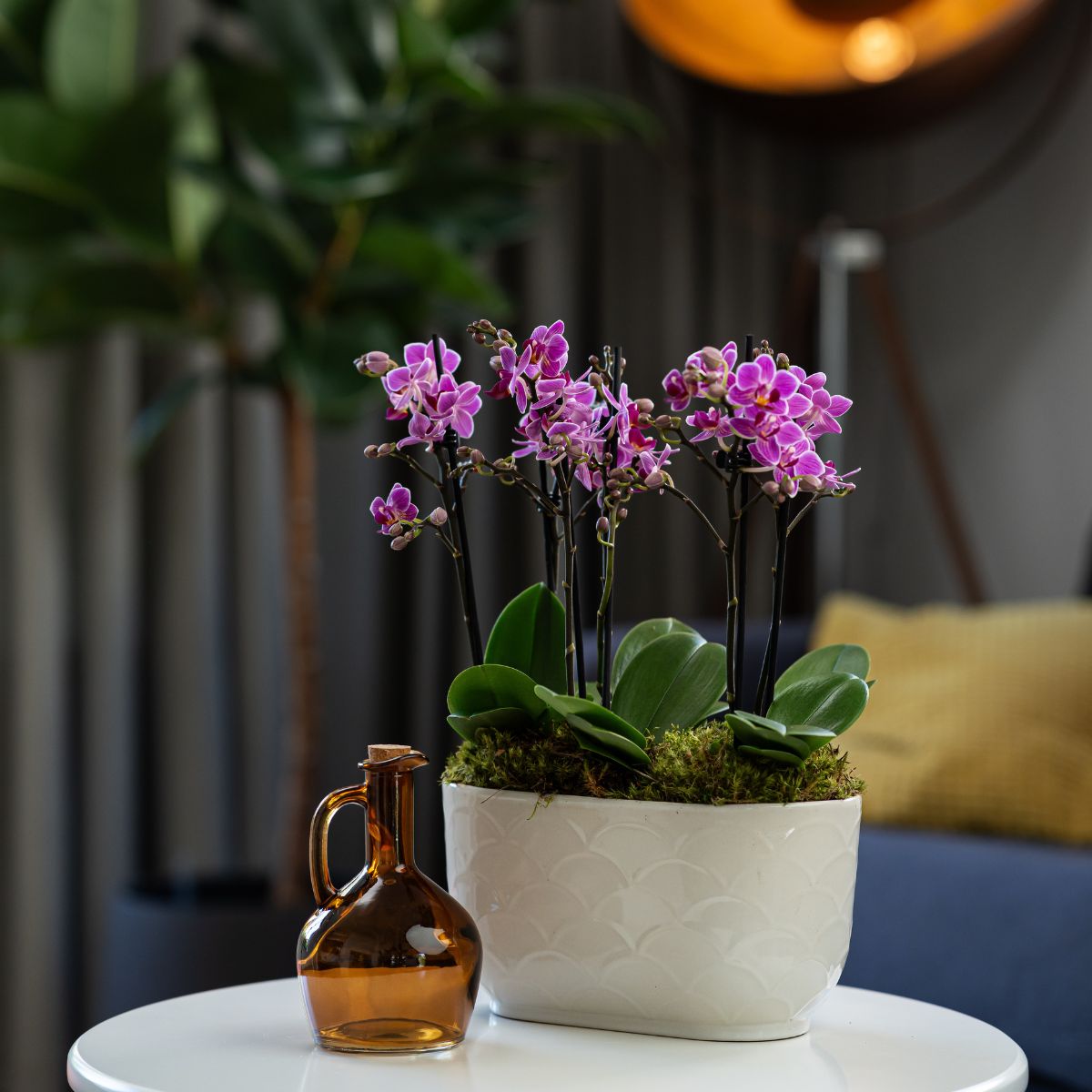
A small amount of ice placed on the bark at the base of each orchid lets the water melt gradually where it's needed. If you prefer not to use ice, a measured amount of water works too.
Planters can retain moisture for longer than a single potted orchid, so always check before adding more water.
Will Ice Cubes Cause Root Rot?
Ice itself isn't what causes root rot.
The bigger risk is roots remaining too wet for too long.
Whatever watering method you choose, the principle is the same: give the orchid the moisture it needs, allow excess water to drain and don't keep the roots permanently wet.
If your roots are already brown, soft or mushy, read Orchid Roots Explained before simply giving the plant more or less water.
So, Should You Water Your Orchid With Ice Cubes?
If it works for you – yes.
You don't have to use ice cubes to grow a healthy Phalaenopsis. If dunking or watering under the tap gives you great results, carry on. If you'd rather use two tablespoons of water, that's fine too.
But if you've struggled with overwatering, have an orchid in a planter or simply want an easy way to control how much water you're giving your plant, the ice cube method is a perfectly valid option – and one we use ourselves.
The most important thing is not the method you choose. It's learning when your orchid actually needs water and avoiding the temptation to give it too much.
For more advice, read How Often Should You Water an Orchid?, explore Orchid Roots Explained or visit our Orchid Care Hub.