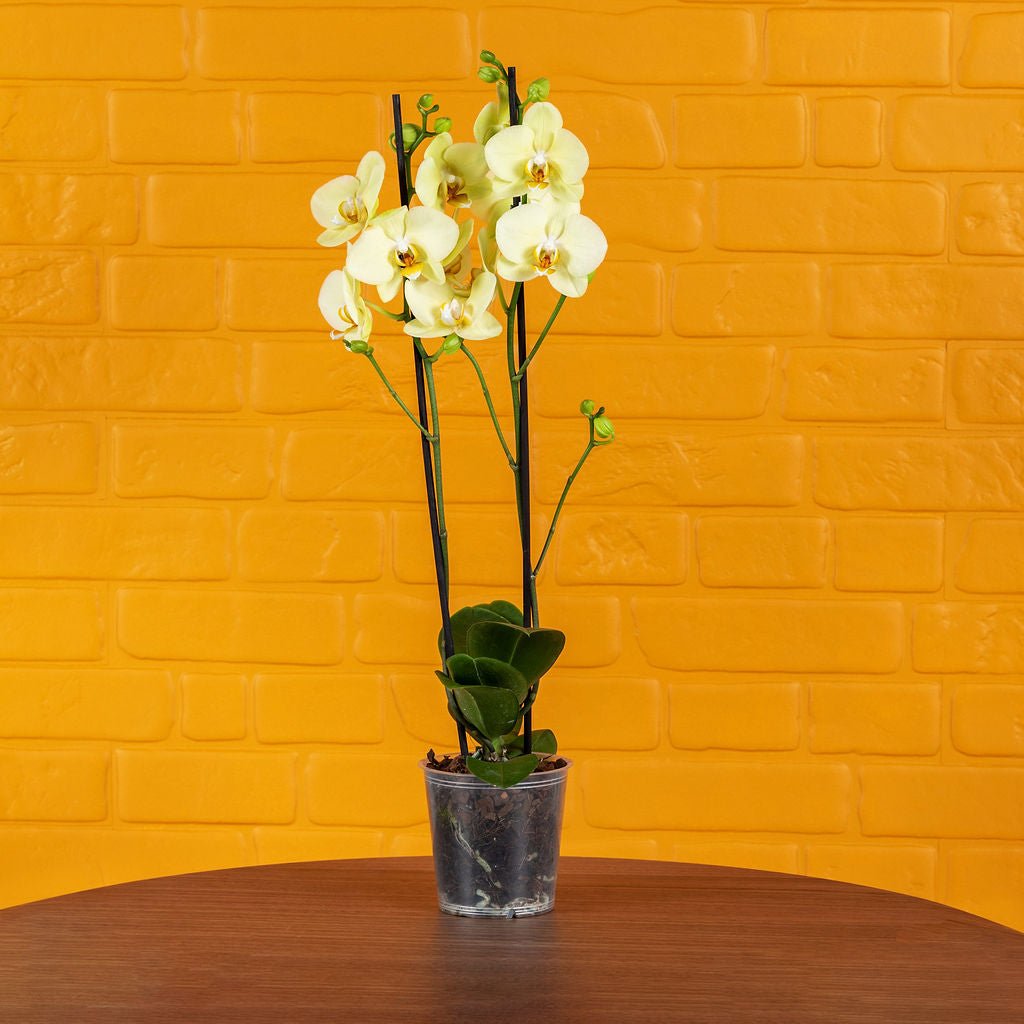



As the days get shorter and temperatures begin to fall, you may be wondering whether you need to change how you care for your orchid.
The good news is that autumn orchid care doesn't need to be complicated. Phalaenopsis orchids are easy to look after throughout the year, but changes in light, temperature and the amount of time they take to dry out mean it's worth making a few simple checks as the seasons change.
At Love Orchids, we grow Phalaenopsis orchids all year round in our New Forest nursery, so we're used to seeing how they respond to seasonal changes. Autumn can actually be a particularly interesting time for your orchid – especially if you're waiting for it to flower again.
In this guide, we'll explain what to look out for as autumn arrives, from finding the right position and adjusting your watering to spotting the beginnings of a new flower spike.
In this guide:
- How much light does an orchid need in autumn?
- Should I water my orchid less in autumn?
- What temperature does my orchid need?
- Why can autumn encourage new flower spikes?
- What if my orchid is still flowering?
- Getting your orchid ready for winter
🌿 Grower's Tip
Don't change your orchid's routine just because the calendar says it's autumn. Watch the plant and its growing conditions. Light, roots and temperature will tell you far more about what it needs.
1. How Much Light Does an Orchid Need in Autumn?
As daylight hours shorten, your orchid may benefit from a brighter position than it needed during summer.
A spot that provided plenty of light in June or July can become surprisingly dark as we move further into autumn. Take another look at where your orchid is positioned and, if necessary, move it a little closer to a window.
Phalaenopsis orchids prefer plenty of bright, indirect light. Avoid strong direct sunlight, which can scorch the leaves, but don't be afraid to give your orchid a brighter position as natural light levels fall.
🌿 Grower's Tip
Look at the light in the room rather than relying on where your orchid has always lived. A position that was perfect in summer may not provide enough light in autumn.
If you're new to orchid care, our orchid care tips for beginners cover the essentials for keeping a Phalaenopsis orchid happy at home.
2. Should I Water My Orchid Less in Autumn?
Possibly – but rather than automatically watering less, we recommend checking your orchid before you water it.
As temperatures become cooler, your orchid may take longer to dry out than it did during warmer weather. How quickly this happens will depend on the conditions in your home, so a fixed watering schedule isn't always the best guide.
Instead, take a look at the roots. Healthy roots are green when they're holding moisture and gradually become silvery-grey as they dry. If the roots are still green, your orchid probably doesn't need watering yet.
If you use our ice cube watering method, the same principle applies. Check your orchid before automatically reaching for the ice cubes.
Whichever watering method you use, avoid leaving your orchid sitting in water and allow any excess water to drain away.
🌿 Grower's Tip
Your orchid doesn't know what day of the week it is. Check the roots rather than watering simply because it's your usual watering day.
For more help, read our guide to watering your orchid, where we explain how to tell when your orchid is ready for a drink.
3. What Temperature Does My Orchid Need in Autumn?
Phalaenopsis orchids are happiest in the comfortable temperatures we tend to have inside our homes, so you don't need to create a special tropical environment for them.
As autumn arrives, however, it's worth checking what's happening around your orchid.
Keep it away from cold draughts, particularly beside frequently opened doors or windows. Once the central heating comes on, avoid placing your orchid directly above a radiator or beside another strong heat source.
Try to give your orchid a relatively stable position with plenty of indirect light rather than continually moving it around the house.
🌿 Grower's Tip
Orchids like consistency. A bright position away from cold draughts and direct heat is usually far better than constantly moving your plant in search of the perfect spot.
4. Why Can Autumn Encourage New Flower Spikes?
If your orchid finished flowering earlier in the year, autumn can be an exciting time to keep an eye on it.
Phalaenopsis orchids can respond to the natural difference between warmer daytime and cooler night-time temperatures. This seasonal change can help encourage a healthy orchid to begin producing a new flower spike.
Take a close look between the leaves for new growth. A flower spike usually begins as a small green shoot emerging from between the leaves and gradually grows upwards.
Don't worry if nothing happens immediately. After flowering, an orchid naturally spends time producing roots and leaves and building up the energy it needs for its next display.
🌿 Grower's Tip
Keep an eye out for new flower spikes appearing between the leaves – autumn's cooler temperatures can help encourage new flowering growth.
If your orchid has already finished flowering, our guide to getting your orchid to bloom again explains what happens next and how you can support its natural flowering cycle.
5. What If My Orchid Is Still Flowering?
If your orchid is happily flowering as autumn arrives, there's no need to change anything simply because the season has changed.
Keep it somewhere bright, check whether it needs watering and enjoy the flowers. If your orchid is thriving in its current position, avoid moving it unnecessarily.
6. Getting Your Orchid Ready for Winter
As autumn moves towards winter, daylight hours will continue to shorten and conditions inside your home may change as the heating is used more regularly.
There's no need to make winter adjustments too early. Continue checking the light, roots and temperature around your orchid and respond to what the plant needs.
When colder weather arrives, our winter orchid care guide has more advice to help your orchid through the next season.
Your Autumn Orchid Care Checklist
Autumn orchid care really comes down to three simple checks:
- Check the light: Make sure your orchid is still getting plenty of bright, indirect light as the days get shorter.
- Check before you water: Cooler conditions can mean your orchid takes longer to dry out, so look at the roots rather than sticking rigidly to a watering schedule.
- Watch the temperature: Keep your orchid away from cold draughts and direct heat from radiators.
🌿 Grower's Tip
Seasonal orchid care doesn't need to be complicated. Check the light, look at the roots and keep your orchid comfortable. Small adjustments are usually all it needs.
Final Thoughts
Autumn isn't about completely changing how you care for your orchid. It's simply a good time to reassess its position, check how quickly it's drying out and make sure it's protected from sudden changes in temperature.
And if your orchid has finished flowering, keep watching between the leaves. Those cooler autumn temperatures may help encourage the beginnings of its next flower spike.
With a little observation and consistent care, your orchid can continue growing happily throughout autumn and into winter.