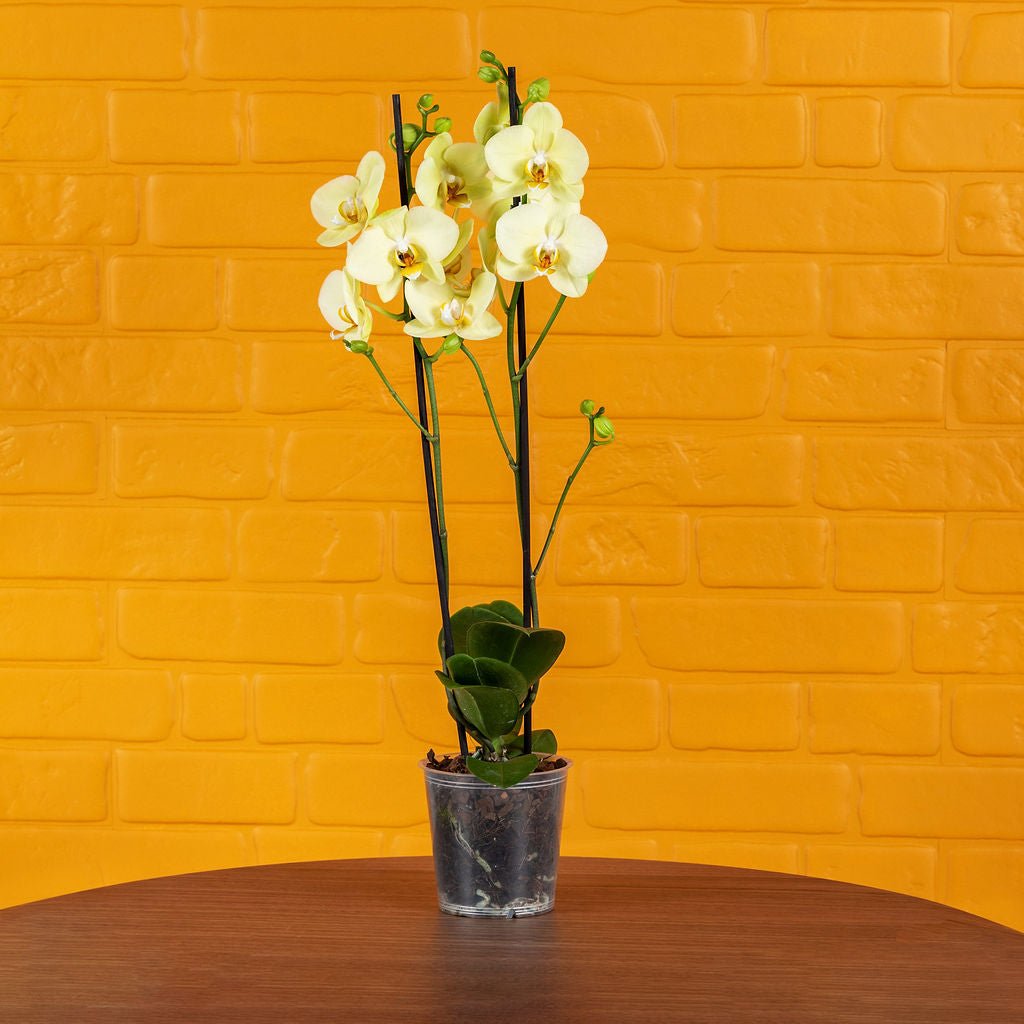



Orchid roots can look a little strange, especially if you're used to other houseplants. They might be green one day and silvery-grey the next, twist around inside the pot or grow upwards and out into the air.
But there's a good reason orchid roots behave differently.
Phalaenopsis orchids are epiphytes. In the wild, they don't grow with their roots buried in soil. Instead, they grow attached to trees, with their roots exposed to the air around them.
Understanding how an orchid grows naturally is one of the easiest ways to understand what its roots need at home – and once you know what to look for, your orchid's roots can tell you a surprising amount about how your plant is doing.
At Love Orchids, we've been growing Phalaenopsis orchids at our family nursery in the New Forest for over 20 years. Roots are one of the first things our growers look at when assessing a plant.
Here's how to recognise healthy and unhealthy orchid roots, understand those strange aerial roots and spot when something might need your attention.
In this guide
- How orchid roots grow in the wild
- Why orchids are grown in bark and clear pots
- What healthy orchid roots look like
- What aerial roots are
- Brown, black or mushy orchid roots
- Dry, shrivelled or hollow roots
- Root or flower spike?
- Orchid roots at a glance
1. How Do Orchid Roots Grow in the Wild?
Phalaenopsis orchids originate from tropical parts of Asia, where they naturally grow in warm, humid forests.
Unlike most of the plants we grow at home, they don't usually grow in the ground. They're epiphytes, which means they grow on another plant – typically attaching themselves to the trunks and branches of trees.
Importantly, they aren't parasites. They don't take food from the tree; they simply use it as somewhere to grow.
Their roots spread across the surface of the bark, helping to anchor the plant in place. Because the roots aren't buried in soil, they're surrounded by plenty of air.
When it rains, the roots become wet and absorb water, but that water can then drain away again.
That natural cycle of getting wet, draining and drying again explains a lot about how we care for Phalaenopsis roots at home.
What Is the Silvery Coating on an Orchid Root?
Phalaenopsis roots have a specialised, sponge-like outer layer called velamen.
Velamen helps the root rapidly absorb and temporarily hold water when moisture becomes available, while also helping to protect the living root tissues beneath.
It's also responsible for that familiar change in colour you can see when you water your orchid.
When the velamen is dry, a healthy root often appears silvery-grey. Once it becomes wet, the velamen becomes more translucent and the green tissue underneath becomes much easier to see.
So a healthy root can naturally change from:
silvery-grey → green → silvery-grey
as it's watered and then gradually dries again.
🌿 Grower's Tip
When caring for your orchid, think about how its roots naturally grow: plenty of air around them, periods of moisture followed by drying, and no heavy, waterlogged soil.
You don't need to recreate a tropical forest at home. Understanding this simple wet-and-dry cycle will help you make much better decisions about when to water.
2. Why Are Orchids Grown in Bark and Clear Pots?
Once you understand how Phalaenopsis roots naturally grow, their unusual potting medium makes much more sense.
Why Orchid Bark?
Ordinary houseplant compost holds much more moisture around the roots – almost the opposite of the open environment a Phalaenopsis root is adapted to.
That's why our orchids are grown in specialist orchid bark rather than ordinary compost. The gaps between the pieces of bark allow air to circulate around the roots while excess water drains freely.
Over time, bark naturally begins to break down and hold more moisture, which is one of the reasons orchids eventually need repotting.
Never repot a Phalaenopsis into ordinary houseplant compost.
If your orchid's bark is beginning to break down, read When to Repot an Orchid: 5 Signs It's Time.
Why the Clear Pot?
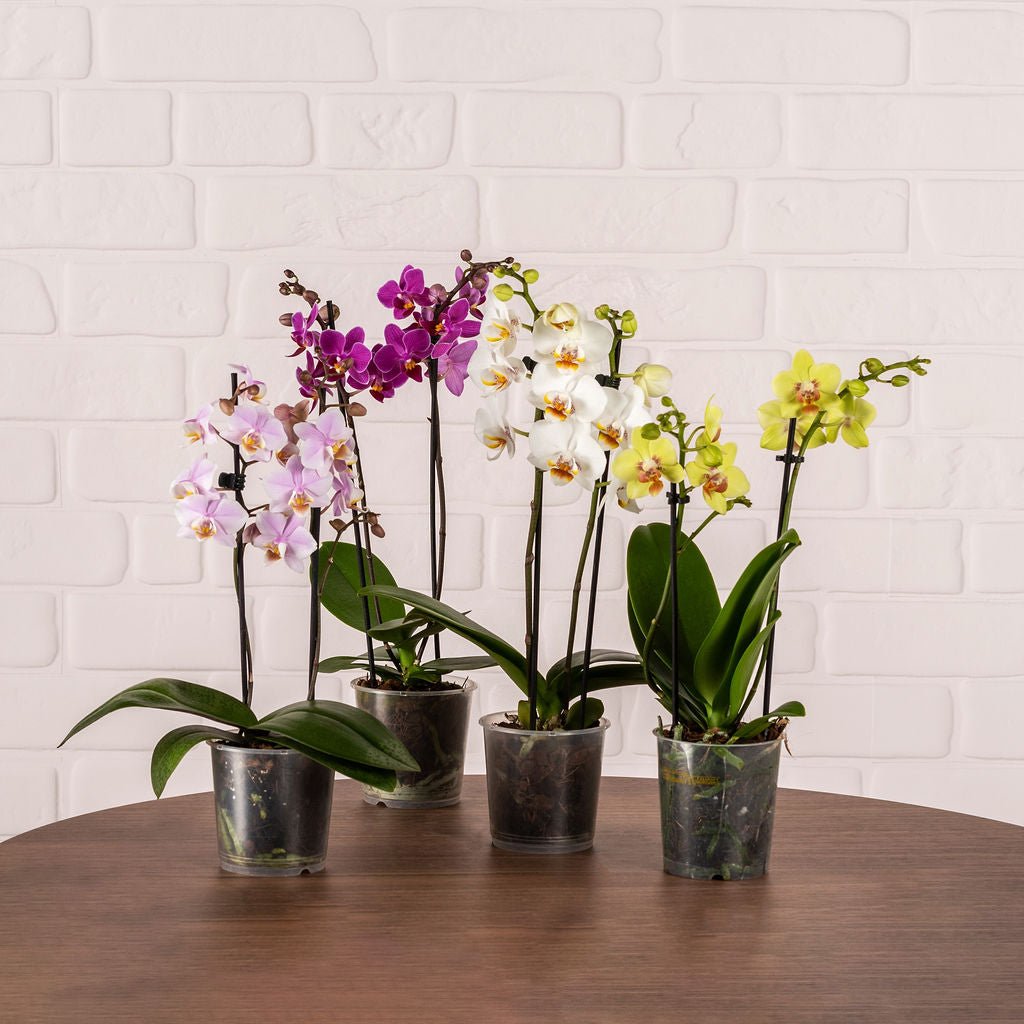
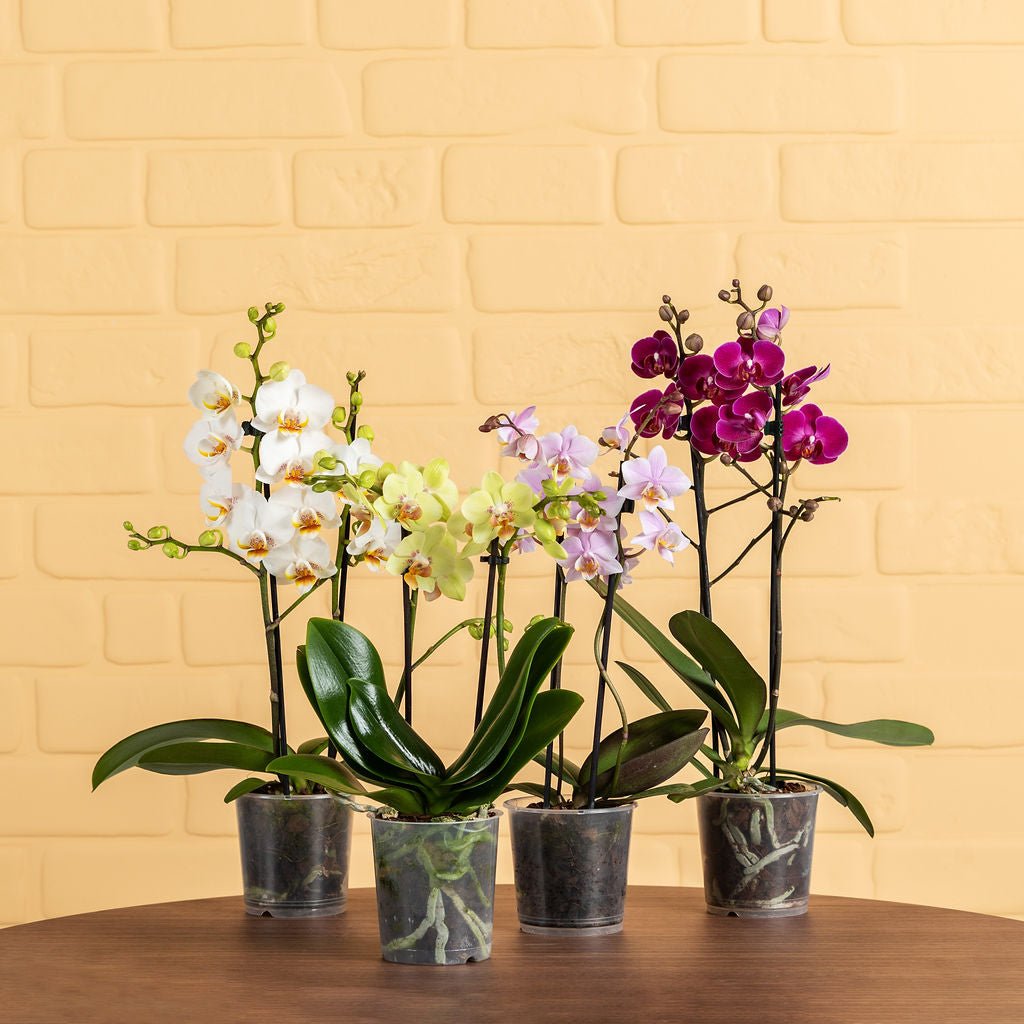
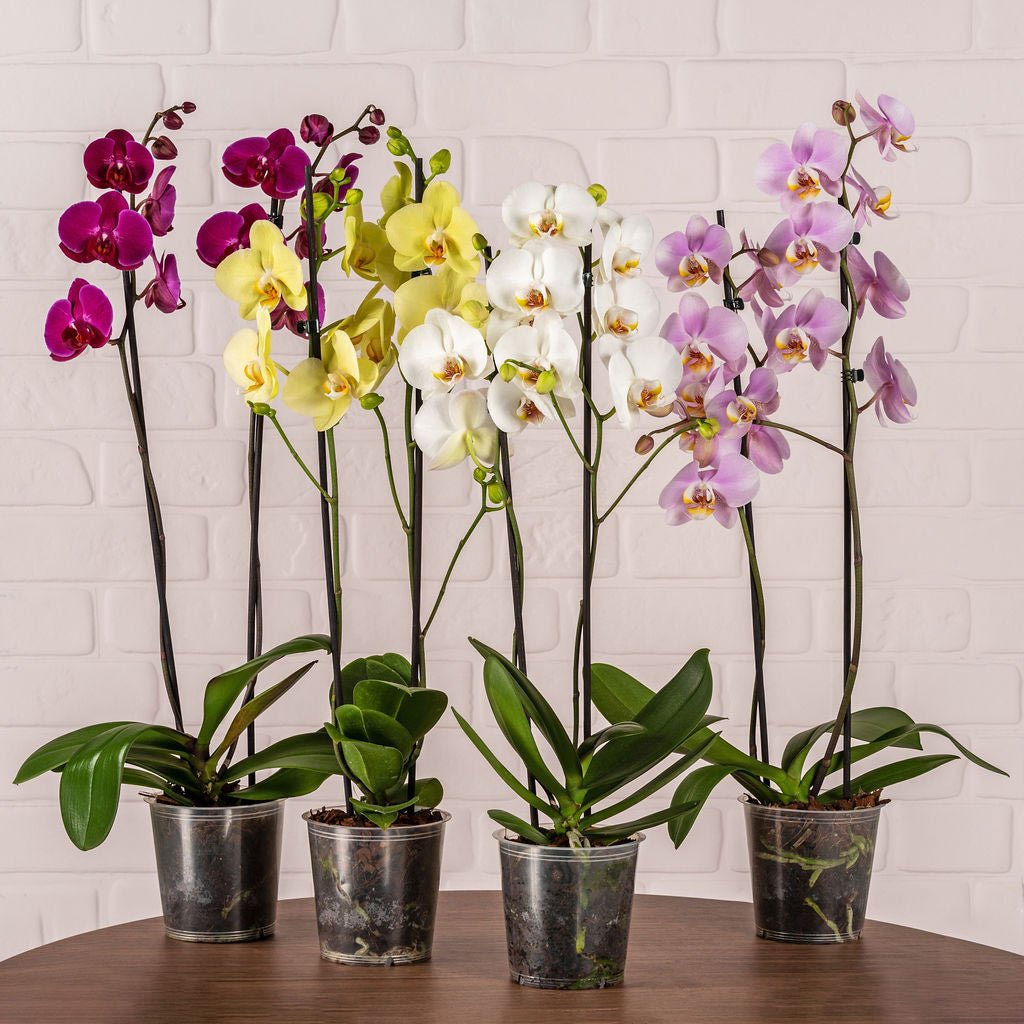
There's a good reason Phalaenopsis orchids are usually grown in clear nursery pots.
Phalaenopsis roots contain chlorophyll and can carry out some photosynthesis when exposed to light. But for you at home, the biggest advantage of the clear pot is much simpler: you can see what's going on around the roots.
Without disturbing your orchid, you can check:
- whether the roots are green or silvery-grey
- how much moisture remains around the roots
- whether fresh roots are developing
- whether any roots look unhealthy
- how the bark is ageing
You can still place the clear growing pot inside a decorative pot. Simply make sure excess water doesn't collect at the bottom and leave the roots standing in water.
🌿 Grower's Tip
Get into the habit of taking a quick look through the clear pot when you water.
Over time, you'll become familiar with what your orchid's roots normally look like, making it much easier to recognise when something genuinely changes.
3. What Do Healthy Orchid Roots Look Like?
Healthy Phalaenopsis roots can look surprisingly different depending on where they're growing and how recently the orchid has been watered.
That's why colour isn't the only thing our growers look at. Texture matters too.
As a general rule, a healthy orchid root should feel firm and plump, rather than soft, mushy, hollow or papery.
Green Orchid Roots
Green roots usually indicate that there's still moisture available.
You'll often notice the roots become noticeably greener immediately after watering as the velamen becomes wet and the green tissue beneath shows through.
If the roots inside your clear pot are still green and the bark looks damp, there's probably no rush to water again.
For more on deciding when your orchid actually needs a drink, read How Often Should You Water an Orchid?.
Silvery-Grey Orchid Roots
Silvery-grey roots can be perfectly healthy too.
This is how Phalaenopsis roots commonly look as they dry, and the change from green to silver is one of the most useful clues your orchid gives you about when it may be approaching watering time.
Don't confuse silver with dead.
A silvery-grey root that's still plump and firm can be a perfectly healthy root that's simply dry.
Bright Green Growing Tips
Fresh growing tips are a particularly good sign.
When your orchid is actively producing new roots, you may notice smooth, brightly coloured tips emerging from the base of the plant or extending from existing roots. The exact colour can vary between varieties, but fresh tips are a good indication that your orchid is actively growing – even if it isn't currently producing flowers.
As the root grows, the familiar silvery velamen develops behind the fresh tip.
Brown Roots
A brown root isn't automatically an unhealthy root.
Roots can become stained or discoloured by bark and water. If the root is still firm and substantial, don't remove it simply because its colour isn't perfect.
🌿 Grower's Tip
Look for patterns rather than individual roots.
An established orchid will naturally have some roots that look better than others. One ageing or damaged root doesn't mean the whole plant is unhealthy.
Our growers look at the root system as a whole, together with the leaves and signs of fresh growth. Plenty of firm, plump roots and fresh growing tips are much more informative than one imperfect root.
4. Why Are Roots Growing Out of My Orchid Pot?
This is one of the questions we're asked most often.
The simple answer is: because it's an orchid.
Those thick roots growing upwards, sideways or over the edge of the pot are called aerial roots, and they're a completely natural part of the way a Phalaenopsis grows.
Remember that in the wild there isn't a neat nursery pot for the roots to stay inside. Phalaenopsis naturally send roots out in different directions, helping to anchor themselves to trees and explore their surroundings.
So aerial roots don't necessarily mean:
- your orchid has outgrown its pot
- it needs more water
- it needs repotting
- something has gone wrong
They're simply part of the plant's natural growth habit.
Should I Cut Off Aerial Roots?
Healthy aerial roots should generally be left alone.
If they're firm and healthy – whether green, silver or whitish – there's no need to remove them simply because they look untidy.
And don't try to force established aerial roots back into the pot. Orchid roots can be brittle and may crack or break if they're bent too far.
Let them grow where they want to grow.
Occasionally an older aerial root may become completely dry, hollow and dead. There's usually no need to disturb the plant simply to remove an imperfect aerial root, but a clearly dead root can be removed carefully with clean scissors when appropriate. If you're unsure whether a root is alive, leave it alone.
Why Are My Aerial Roots Always Silver?
Because they're exposed to the air, aerial roots often spend much of their time looking silvery-grey.
That's normal.
If you wet one, you may see it become greener as the velamen absorbs water – just like the roots inside the pot.
You don't need to continually mist an aerial root simply because it's silver.
🌿 Grower's Tip
Aerial roots can be adventurous. In the wild they're designed to cling to the surface of a tree, so at home they may try to attach themselves to whatever happens to be nearby.
If you notice a root growing towards a wall or wallpaper, move the pot slightly before the root attaches itself rather than trying to pull the root away later.
And don't worry if your orchid seems determined to grow roots in every direction. That's much closer to how a Phalaenopsis naturally grows than the neat upright plant you see in its pot.
Do Aerial Roots Mean My Orchid Needs Repotting?
Not necessarily. A Phalaenopsis can produce plenty of aerial roots while being perfectly happy in its existing pot.
Healthy aerial roots alone aren't a reason to repot. Instead, look at the condition of the bark and the roots inside the pot. If the bark is breaking down, remaining wet for longer, or there are significant dead or rotting roots, it may be time to repot.
Read our full guide: When to Repot an Orchid: 5 Signs It's Time.
5. Why Are My Orchid Roots Brown, Black or Mushy?
This is where the feel of the root becomes particularly important.
A root that's brown but still firm isn't necessarily a problem. Orchid roots can become stained or naturally change appearance as they age.
What concerns us more is a root that's brown or black and soft, mushy, slimy or collapsing.
These are signs that the root may be damaged, dead or rotting.
What Causes Orchid Root Rot?
Phalaenopsis roots need moisture and air.
Problems can develop when the roots remain wet for too long. This can happen if:
- the orchid is watered again before it has dried sufficiently
- excess water is left sitting inside a decorative pot
- drainage is poor
- old bark has broken down and is retaining too much moisture
This is why overwatering isn't simply about the quantity of water you give your orchid at once.
A healthy Phalaenopsis can be watered thoroughly provided excess water can drain away.
The bigger problem is roots remaining persistently wet without enough air around them.
Signs of Unhealthy or Rotting Roots
Look for a combination of:
- brown or black roots that are soft or mushy
- roots that collapse when gently handled
- the outer root covering slipping away easily
- dark or badly decomposed bark
- bark that stays wet for a long time after watering
- an unpleasant smell from the growing medium
- relatively few firm, healthy roots remaining
If enough roots become damaged, you may also notice changes above the pot. The leaves can become limp or wrinkled because the damaged root system is no longer able to supply the plant effectively.
What Should I Do About Rotten Orchid Roots?
First, assess the whole root system rather than panicking about a single root.
If there are only one or two damaged roots, plenty of healthy ones remain and the bark is still in good condition, you may simply need to adjust your watering and make sure excess water is draining away.
If many roots are soft or rotten, or the bark has badly deteriorated, it's likely to be time to repot.
Clearly dead or rotten roots can be removed with clean, sharp scissors or secateurs when repotting, before the orchid is placed into fresh specialist orchid bark.
But remember: don't remove a root simply because it isn't green. If it's firm, leave it.
🌿 Grower's Tip
A plant with damaged roots can sometimes look thirsty, because those roots can no longer supply the plant effectively.
That means limp or wrinkled leaves don't automatically mean “add more water”. If the bark is already wet, check the roots before reaching for the watering can.
Adding more water to an already struggling root system can make the original problem worse.
Concerned about extensive root damage or old bark? Read When to Repot an Orchid: 5 Signs It's Time.
6. What About Dry, Shrivelled or Hollow Orchid Roots?
At the other end of the scale are roots that look extremely dry.
Healthy Phalaenopsis roots should generally be plump and firm.
If many roots are becoming noticeably wrinkled or shrivelled and the bark is extremely dry, your orchid may not be receiving enough water.
But there's an important distinction between a dry living root and a dead root.
Silvery Doesn't Mean Shrivelled
A healthy root that's ready for water may be silvery-grey but should still have some substance to it.
Silvery-grey + firm and plump
Usually a healthy root that's drying.
Wrinkled or shrivelled + very dry bark
May indicate the orchid needs more moisture.
Completely dry, hollow, brittle or papery
Likely a dead or severely damaged root.
A living dry root may become greener and more hydrated after watering. A root that's completely dry, hollow and dead won't recover simply because you give the orchid more water.
What Should I Do With Dead Roots?
There's no need to disturb a happily growing or flowering orchid to remove every imperfect root.
If you're repotting, however, it's a good opportunity to inspect the root system and carefully remove roots that are clearly dead, hollow or rotten using clean tools.
Keep anything that's still firm and healthy.
For the full process, see our orchid repotting guide.
7. Root or Flower Spike?
Spotting a new growth emerging from the base of your orchid is exciting – but is it a new root or a new flower spike?
A new Phalaenopsis root usually has a smooth, rounded tip and looks plump. As it grows, you'll begin to see the familiar silvery velamen developing behind the fresh growing tip.
A flower spike usually emerges from a leaf axil, where a leaf meets the main stem. Its tip tends to look flatter and more pointed than a root, and its characteristic nodes become easier to recognise as it develops.
If you're not sure, wait. A little more growth will usually make the answer much clearer – and whether it's a root or a spike, both are good signs that your orchid is actively growing.
[IMAGE: New orchid root vs new flower spike]
If it is a flower spike, our How to Get Your Orchid to Bloom Again guide explains what happens next.
Orchid Roots at a Glance
Green + firm and plump
✓ Healthy and hydrated.
Silvery-grey + firm and plump
✓ Healthy and drying.
Fresh growing tips
✓ Active root growth – a very good sign.
Roots growing outside the pot
✓ Normal aerial roots. Leave healthy ones alone.
Brown but firm
✓ Not necessarily a problem. Colour alone doesn't mean a root is rotten.
Brown or black + soft or mushy
⚠ May be dead or rotting. Check the surrounding bark and the rest of the root system.
Wrinkled or shrivelled + very dry bark
⚠ Your orchid may not be receiving enough water.
Completely dry, hollow or papery
⚠ Likely a dead or severely damaged root.
Let Your Orchid's Roots Guide You
Once you understand how Phalaenopsis orchids naturally grow, their roots stop looking quite so strange.
Aerial roots are normal. Silvery roots aren't dead. And healthy orchid roots don't have to look perfectly green all the time.
The key is to look at colour, texture and the root system as a whole rather than worrying about one imperfect root. That's what our growers do too – looking at the roots alongside the leaves, fresh growth and the conditions surrounding the plant.
Get into the same habit at home and your orchid's roots become one of the most useful tools you have for understanding what your plant needs.
Continue Your Orchid Care
Not sure when to water? Read How Often Should You Water an Orchid?
Think your orchid needs fresh bark? Read When to Repot an Orchid: 5 Signs It's Time
Want to understand your plant beyond the basics? Read Expert Orchid Care Tips from the Grower
New to orchid care? Start with Orchid Care Tips for Beginners